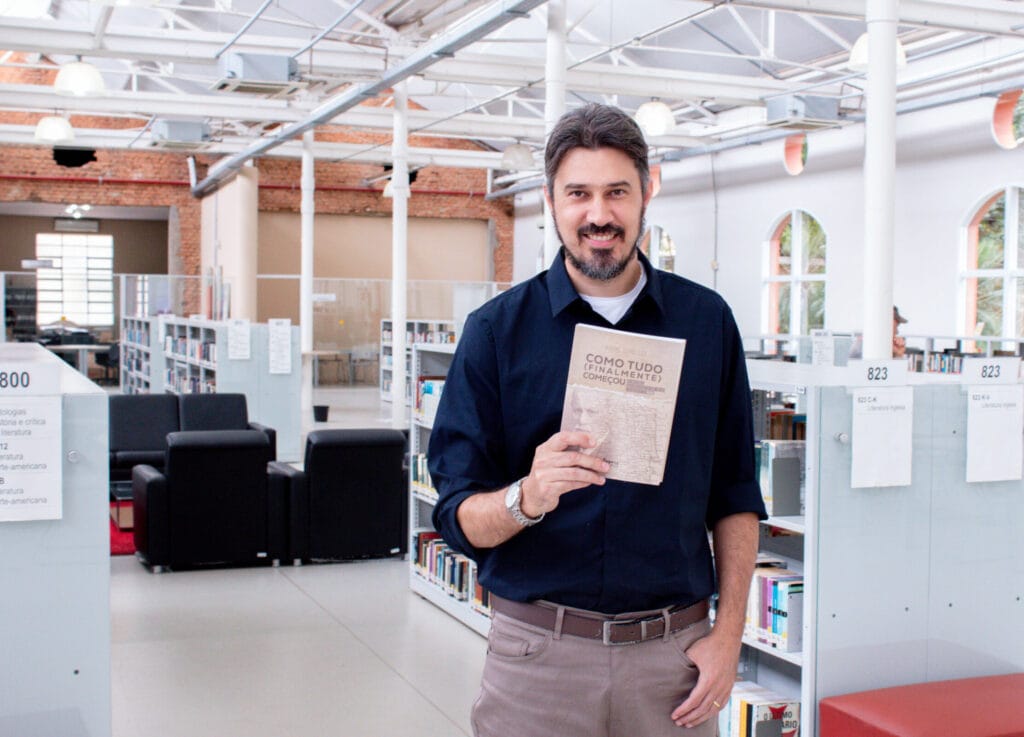
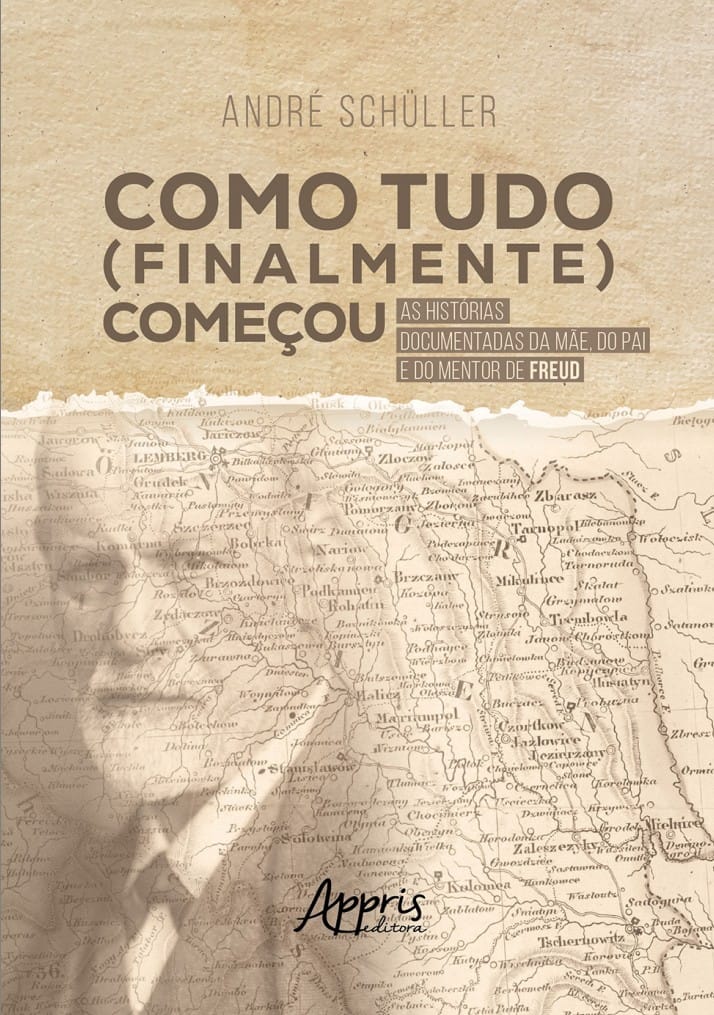
The following excerpt, taken from How It All [Finally] Began: The Documented Stories of Freud’s Mother, Father, and Mentor, is part of an attempt to broaden the understanding of the origins of the relationship between Freud and Breuer, whose encounter preceded by many years the version traditionally repeated by the official biography, which places this rapprochement only in Ernst Brücke’s physiology laboratory, when the future psychoanalyst was already studying medicine.
Beyond the Viennese university environment, this story involves earlier figures and connections, such as Amalia Nathansohn, Freud’s mother, who arrived in Vienna while still an adolescent and there came to know the importance of Leopold Breuer, Josef’s father, a leading rabbi within the Israelitische Kultusgemeinde — Vienna’s principal Jewish community — and a figure of international standing in the Judaism of his time; Samuel Hammerschlag, a close friend of the Breuer family and an important figure in the formation of both Josef and Freud himself; and the fact that Freud read and preserved, from his youth onward, a book written precisely by the father of his future mentor. By illuminating this background, the excerpt also helps reposition the way we understand the birth of psychoanalysis.
The analysis of the historical and cultural context of the neighborhood that received the Freud family in 1860 allows for a broader understanding of the relationships that shaped the trajectory of the future psychoanalyst. This recovery not only offers a clearer view of the environment in which Freud grew up, but also reveals an unpublished detail: the connection between the Freud and Breuer families preceded by many years the supposed first contact between Sigmund and Josef Breuer in 1877.
Far from being an initiative exclusively undertaken by the young Freud in search of deeper knowledge in physiology, the link between the two families may have been established decades earlier, still during the period when Amalia Nathansohn lived in Vienna. Having lived in the city for about twelve years after leaving Brody and Odessa, Amalia had contact with important figures of the local Jewish community — including the Breuers. This detail reshapes the traditional narrative, suggesting that the rapprochement between Freud and his mentor did not occur in isolation, but within a network of relationships previously established by their families.
This discovery broadens our perception of the factors that influenced Freud’s early years and reinforces the importance of contextualizing his professional connections within a broader social setting. Rather than a fortuitous encounter between master and disciple, the relationship between Freud and Breuer was, in a certain sense, facilitated by already existing ties.
During this period, from the establishment of the IKG library — which Amalia surely frequented — until the moment of her marriage, she built a relationship with this communal structure. After five years living in Freiberg, she returned to the city where her parents were and there remained from the age of twenty-five until reaching ninety-five (1860–1930). Thus, those who ignore the existence of a past linking the parents of the psychoanalyst to the father of Josef Breuer long before the birth of Sigmund Freud are mistaken. One is likewise mistaken in failing to present to those interested in this historical reconstruction that Freud had contact with Leopold Breuer already in his childhood, especially when he attended the Jewish Religionsschule, an institution in which he formed a very strong bond with none other than Samuel Hammerschlag, a close friend of the Breuers and a fundamental figure in the personal formation of Josef Breuer.
This forgotten or little explored episode by Freud’s biographers can be organized into three brief stages. The first corresponds to the young Freud’s entry into religious instruction classes around the age of thirteen, since an old law in force in Austria required Jews to complement formal education with about three weekly hours dedicated to the study of Jewish history and legislation. Next comes the fact that Freud studied and preserved throughout his life his copy of The Biblical History and Judaism for Israelite Youth, published by the important father of Josef and Adolf in the year he arrived in Vienna with his parents and two sisters (Anna, his immediate sister, and Rosa, still in Amalia’s womb). Finally, one must highlight the strong emotional bond established between Freud and the director of the Religionsschule in those years, between 1868 and 1869: Samuel Hammerschlag.
Speaking a little about this man who profoundly influenced the way Freud would see the world, relationships, and the phenomena around him, it is known that Samuel Hammerschlag headed the IKG library for several consecutive years, possibly being the first professional to occupy this position. Moreover, he was a close friend of Leopold Breuer and of other members of the family since the late 1830s, eventually replacing Leopold in the direction of the religious school for sixteen years (1857–1873). Against the wishes of many members of the community, Hammerschlag was forced to abandon the position due to a progressive medical condition.
On a personal level, Hammerschlag sought, among the many achievements that marked his seventy-eight years of life, to fill at least part of the space left by Bertha Breuer after her death in the 1840s, shortly after the birth of her second son, Adolf Breuer. Because of this closeness, he eventually became a fundamental figure in the life of the firstborn of the Breuer family, Josef — a bond that would later be sealed through a gesture of homage: one of Josef Breuer’s daughters with Mathilde Breuer married Paul Hammerschlag, the eldest son of Samuel and his wife.
With regard to the relationship between Freud and Hammerschlag, it is known that the future psychoanalyst met the teacher at the beginning of his adolescence. Less important than the fact that Freud sought this man’s advice around the age of thirty — something that can be confirmed through the correspondence between Freud and his fiancée at the time — is the duration of this relationship: no less than thirty-four years. In other words, Freud maintained a close bond with Hammerschlag from the age of thirteen or fourteen until the writing of Three Essays on the Theory of Sexuality, published in 1905, one year after the teacher’s death.
Taking into account the many occasions on which Hammerschlag must have mentioned Josef Breuer as an example to be followed by this diligent and knowledge-seeking student, it is interesting to note that Freud honored Hammerschlag at least twice: by naming his fifth daughter in reference to a niece of the family (Sophie Schwalb), and his youngest (Anna Freud) in memory of the “lovely Anna Hammerschlag,” as he mentioned in a letter.